

| Three Decades of Vector Fitting |
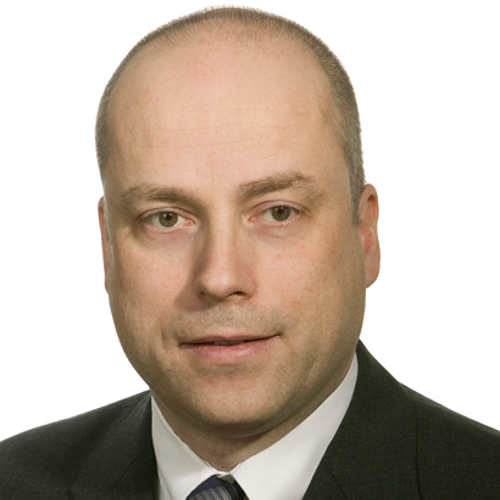 Bjørn Gustavsen SINTEF, Norway LinkedIn ResearchGate |
Rational fitting methods are widely used in the industry and academia for developing compact simulation-ready black-box models for design, analysis and verification of high-speed electronic components and systems. Starting from discrete field solver or measurements data in the frequency domain or time domain, a rational model can be extracted from the data set using suitable fitting techniques, giving a compact model that can be easily incorporated in standard simulation programs. In this talk we focus on one highly successful rational fitting method – Vector Fitting – that was conceived in 1996. We go through the initial development which led to the first useful implementation and review the many later extensions and improvements. We further place Vector Fitting in the context of passivity enforcement, and the final use of the model in time domain simulations. Along with open-source Matlab codes, this defines a complete and readily available workflow for converting frequency domain data into simulation-ready models. The talk finishes with some application examples. |
|
Bjørn Gustavsen is a Chief Scientist at the Norwegian-based SINTEF Energy Research foundation, being responsible for the area of electromagnetic transient modeling and simulation. He is also an adjoint professor at the Norwegian University of Science and Technology (NTNU). His area of expertise is methods for data-driven modeling of components and subsystems from frequency domain data, and their implementation in simulation software. He is the original developer of Vector Fitting, together with Prof. Adam Semlyen, and has also contributed to passivity enforcement and frequency-dependent transmission line modeling. Although his application areas are in high-voltage power systems, the developed methods are equally well applicable to high-speed electronic systems. He is an IEEE Fellow, has published more than 150 technical papers, and has co-authored the book Passive Macromodeling together with Prof. Stefano Grivet-Talocia. |
|
| From Transistors to Racks: Power Delivery Challenges in the AI Era |
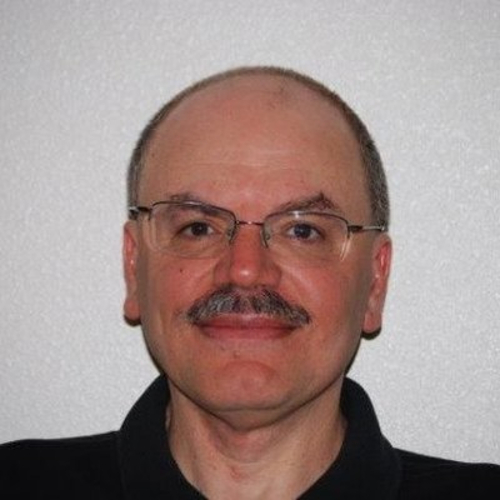 Tawfik Rahal-Arabi AMD, USA |
The rapid growth of artificial intelligence is driving unprecedented demand for compute performance and power. Continued improvements in performance and energy efficiency increasingly require optimization across the entire computing stack, from transistors and circuits through silicon, package, board, rack, software, and ultimately the data center. Looking toward 2030, AMD has set an ambitious goal of improving rack-level energy efficiency, with the vision that an AI workload requiring more than 275 racks today could ultimately be accomplished within a single rack. Achieving this vision is not simply a compute-scaling challenge. It is also fundamentally a power-delivery challenge. In this keynote, we will review some of AMD’s efforts in GPU power and power delivery, spanning circuit-level optimizations through chip- and system-level techniques for managing power and increasingly dynamic workloads. We will discuss why innovations across circuits, power delivery, packaging, cooling, systems, and software must work together, and why power delivery will increasingly become an integral part of system architecture as the industry continues to scale AI performance while keeping data-center power sustainable. |
|
Tawfik Rahal-Arabi is an AMD Fellow and IEEE Fellow working on data-center power efficiency at AMD. His work focuses on improving GPU power efficiency and power delivery, spanning circuit, silicon, platform, and system-level technologies. Prior to AMD, Tawfik was a Senior Principal Architect at Microsoft, where he developed co-optimized hardware/software solutions to improve the power efficiency of Microsoft data centers. Before Microsoft, he was a Senior Principal Engineer at Intel, where he worked on laptop and desktop platforms and contributed innovations in performance, power, and power delivery. Tawfik received his Ph.D. in Electrical Engineering from Syracuse University. He is the recipient of numerous company and IEEE awards, including six Intel Achievement Awards. He has authored more than 100 journal and conference publications and holds more than 30 patents. |
|