The Global Signal Integrity and Power Integrity (SIPI) University was successfully introduced by the IEEE EMC Society at the 2024 IEEE International Symposium on EMC+SIPI in Phoenix, AZ, USA, and, following high demand, held for a second time with a curriculum over two full days at the 2025 IEEE International Symposium on EMC+SIPI in Raleigh, NC, USA. In a spirit of close collaboration and advancing technology worldwide, the IEEE EMC Society, in partnership with the IEEE EPS and the SPI 2026 Organization, will introduce the Global SIPI University at the 2026 IEEE Workshop on Signal and Power Integrity (SPI), to be held in Turin, Italy.
| June 14, Sunday @ Castello del Valentino |
 |
Global Signal Integrity and Power Integrity (SIPI) University |
| Course Presentation Flyer |
Modern high-speed digital systems are rapidly increasing in complexity as data rates climb and power distribution demands intensify. These unprecedented challenges require dedicated expertise in Signal Integrity (SI) and Power Integrity (PI), skills that are critically sought after by industry but are often scarce in traditional academic programs.
The Global SIPI University @ SPI 2026 will be a focused, one-day intensive course, outlined to equip students, technicians, and engineers with further tools to bridge this crucial skills gap. Attendees will dive deep into SI & PI core concepts, learning directly from experienced and renowned instructors drawn from both industry and academia. The carefully curated curriculum aims to balance fundamental theory with direct practical application, covering analytical methods, simulation tools, and measurement techniques for solution validation.
Co-Chairs

Christian Schuster
Hamburg University of Technology, Germany
Short Bio |
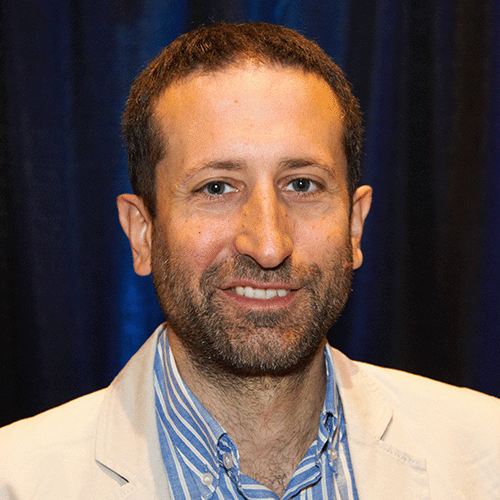
Francesco de Paulis
University of L’Aquila, Italy
Short Bio |
| Instructors |
| |

Xiaomin Duan
IBM Research and Development GmbH, Ehningen, Germany
Short Bio |
Keynote
SI and PI challenges for enterprise server design
In recent years, enterprise server deployment growth is exponential, fueled by AI acceleration, cloud-native computing, and heterogeneous workloads. These systems now demand extreme bandwidth densities and power delivery capabilities, often exceeding multi-terabit signaling and multi-kilowatt power envelopes. Such requirements place profound challenges in signal integrity (SI) and power integrity (PI) design. This keynote will examine the SI and PI challenges inherent to modern server design, with emphasis on high-speed interconnects, advanced packaging technologies, and power delivery networks. In particular, this talk will show how physical constraints such as board real estate, mechanical limits, and cost-performance trade-offs influence design decisions. It will include practical cases, highlighting co-design strategies, modeling techniques, and system-level optimization approaches. The goal is to foster a deeper understanding of how SI/PI methodologies evolve to meet the demands of next-generation computing infrastructure.
|
|
Francesco de Paulis
University of L’Aquila, L’Aquila, Italy
Short Bio |
Introduction to SI & PI
Introduction to Signal Integrity and Power Integrity
This presentation will introduce the concepts of signal and power integrity, and the evolution, in the past two decades, of the challenges associated with the modeling, analysis, and design of high speed interconnects and high-current PDNs. An overview of the current trends based on the state of the art of the technology discussed in the following sessions will be given.
|
|

Andreas Hardock
Nexperia Germany GmbH, Hamburg, Germany
Short Bio |
Signal Integrity I
Lumped vs. distributed discontinuities,
transmission line effects, crosstalk & losses
As data rates and edge speeds in modern electronic systems continue to rise, the distinction between lumped and distributed discontinuities becomes critical for accurate signal-integrity and electromagnetic-compatibility design. This presentation gives an overview of how geometric and material transitions within interconnects behave either as localized impedance discontinuities or as electrically long structures exhibiting full transmission-line effects. Key mechanisms — including reflections, standing waves, and frequency-dependent propagation — are discussed to illustrate when traditional lumped-element approximations break down. The study further examines how distributed coupling paths give rise to near-end and far-end crosstalk, emphasizing the impact of trace geometry, dielectric properties, and return-path configuration. Additionally, conductor and dielectric losses are discussed in the context of attenuation, phase distortion, and their influence on high-speed waveform integrity. By integrating these phenomena into a unified perspective, the presentation highlights practical design considerations for minimizing signal degradation and ensuring robust performance across high-frequency interconnects.
|
|

Wendem Beyene
Meta Platforms, Sunnyvale CA, USA
Short Bio |
Signal Integrity II
3D modeling and simulation,
circuit modeling and simulation, equalization
3D electromagnetic modeling and simulation, circuit-level modeling and simulation, and equalization are foundational to modern electronic system design, particularly for high-speed and high-frequency applications. When applied in an integrated manner, these techniques enable accurate performance prediction, early identification of signal- and power-integrity challenges, and systematic design optimization prior to physical prototyping—significantly reducing development time, cost, and overall technical risk. This presentation will highlight the successful design of modern SoCs and ASICs for wearable devices and infrastructure systems supporting AI workloads. As these designs incorporate both in-package and external memories with high-speed I/O interfaces and therefore require comprehensive electromagnetic analysis and circuit-level simulation. The discussion will include detailed system-level modeling and analysis methodologies used to optimize end-to-end performance across the complete signal and power delivery paths.
|
|

Giordano Mariani
Rohde & Schwarz, Milan, Italy
Short Bio |
Signal Integrity III
VNA Measurements in Signal Integrity
Signal integrity has become a critical aspect of modern high-speed digital design, today more than ever as data rates continue to rise and reliable transmission become essential. In this seminar, we will understand how VNAs are used to identify potential signal integrity issues and address them using tools and applications integrated in the network analyzer. First, we will cover the basics of VNA parameters and time domain analysis, which is necessary to gain the correct insights about my DUT. Then we will discuss the topic of de-embedding and see how it can help the designer make the correct choices when developing his PCB. We will end this presentation with a live demo of our VNA in action, including real measurements of transmission lines.
|
|
| TBA |
Power Integrity: Grounding and decoupling concepts,
PDN design for PCBs and packages, VRMs |
|

Peter Hank
NXP Semiconductors GmbH, Hamburg, Germany
Short Bio

Aman Gupta
NXP Semiconductors GmbH, Hamburg, Germany
Short Bio
|
Application Perspective
SI and PI aware design of automotive interconnects
The necessity of further improved EMC/ESD/SIPI behavior and optimized PCB design is obvious, because high-complexity products with enhanced safety/security requirements need to be managed. Advanced PCB’s with BGA-IC packages, high-speed clock lines with rich spectral-content, high-frequency signals with sharp rise-times and high slew-rates, often require an increased number of stacked PCB layers. To benefit from leading-edge technology processes and functions, many IC’s require several voltage-rails and an optimized PDN, allowing reliable Inter-Chip connections along with proper communication between Electrical Control Units. This presentation provides an overview of most current challenges and gives an outlook how the complexity and the challenges can be managed, while meeting cost and time to market constraints under the harsh conditions of automotive applications.
|
|
| Global SIPI University Registration Fees |
EARLY BIRD
until March 27, 2026 |
STANDARD
March 28, 2026, onwards * |
Attendees registered
also for SPI |
Regular |
€ 100 |
€ 150 |
| Student |
€ 50 |
€ 75 |
Attendees registered
only for G-SIPI-U
|
Regular |
€ 200 |
€ 250 |
| Student |
€ 100 |
€ 125 |
* Due to capacity limits, the Registration process may close at any time after this date. On-site registration may not be available.
ALL FEES INCLUDE
Full access to the course program • Lunch and coffee-breaks (Sunday) • Certificate of attendance (PDF format)

